The first chapel.
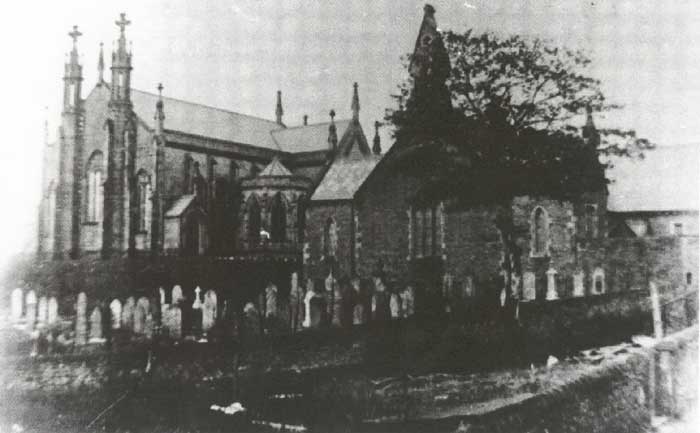
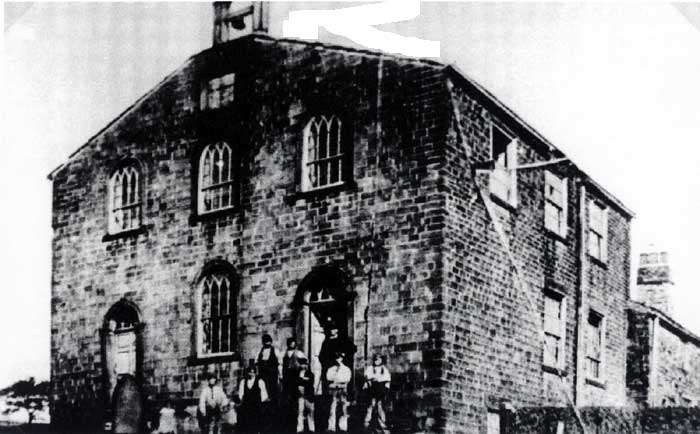
A small Wesleyan society had gathered in the village of Summerseat by the mid-1820s, taking its preachers from the Bury Wesleyan circuit. In 1830 the society raised a plain stone chapel on rising ground above the River Irwell, with a graveyard attached.
A new chapel for a growing congregation.
Within a generation the society had outgrown its first home. Cotton mills along the Irwell had drawn families to Summerseat from across Lancashire and beyond, and the Sunday and weekday congregations could no longer be accommodated.
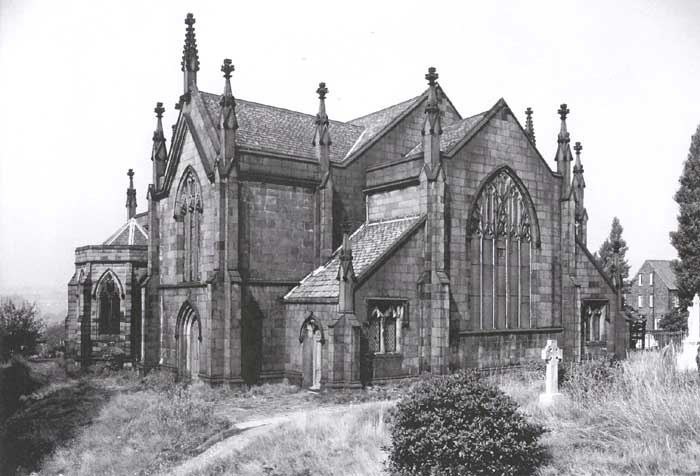
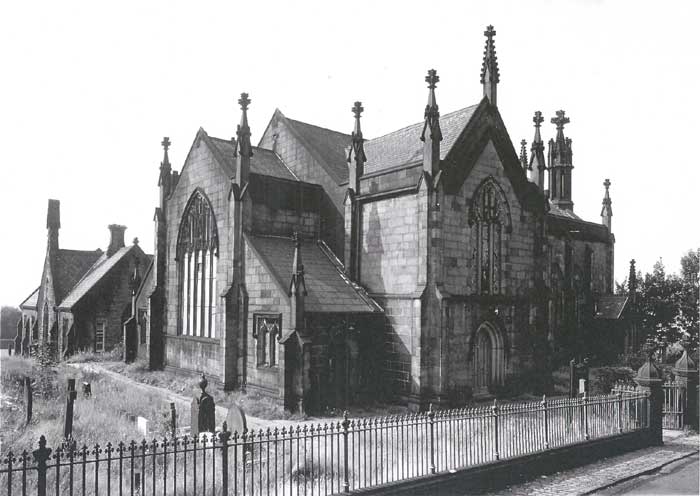
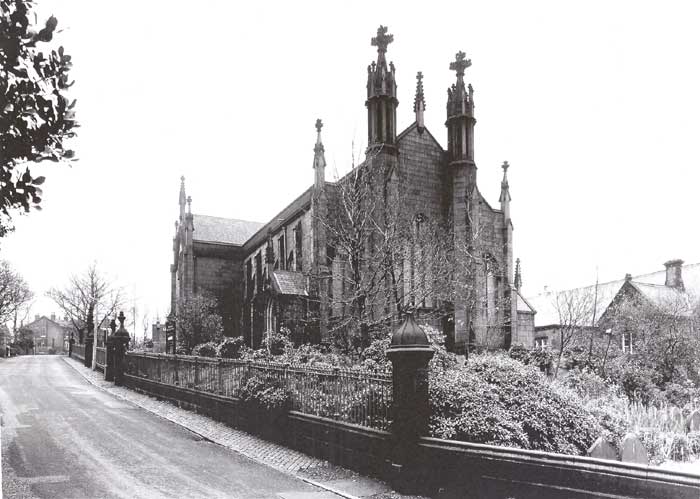
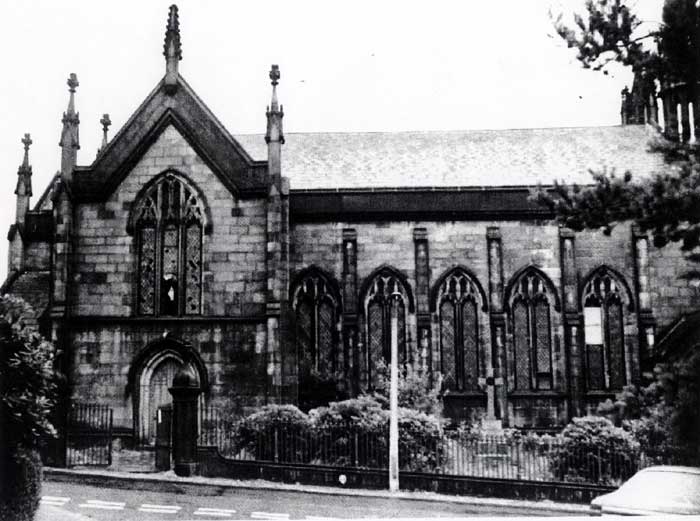
A new chapel was opened in 1847 on the same plot, in a confident Gothic Revival style with pinnacled buttresses, traceried windows, and a pitched slate roof. The building was largely financed by John Robinson Kay, mill owner and trustee, who had married into the Hamer family of Summerseat House and inherited the Wood Road Mill.
The benefactor's grave.
John Robinson Kay died on the 7th of January 1872, aged 65, and was buried in the chapel he had helped to build. The Kay family mausoleum still stands on the site, the only intact structure remaining today.
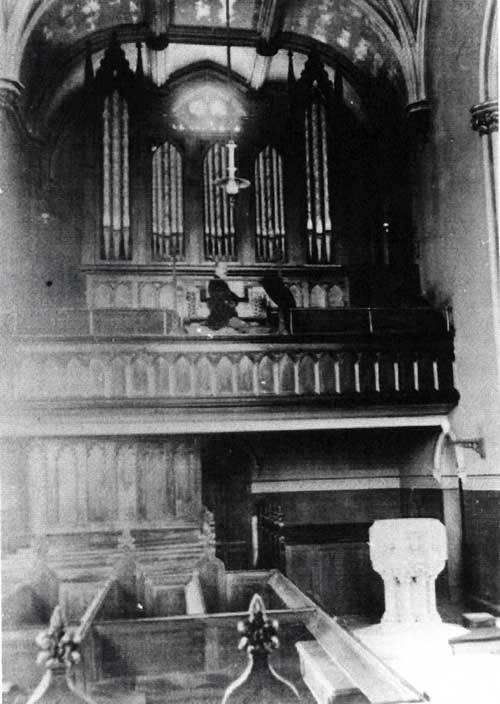
Inside the Gothic chapel.
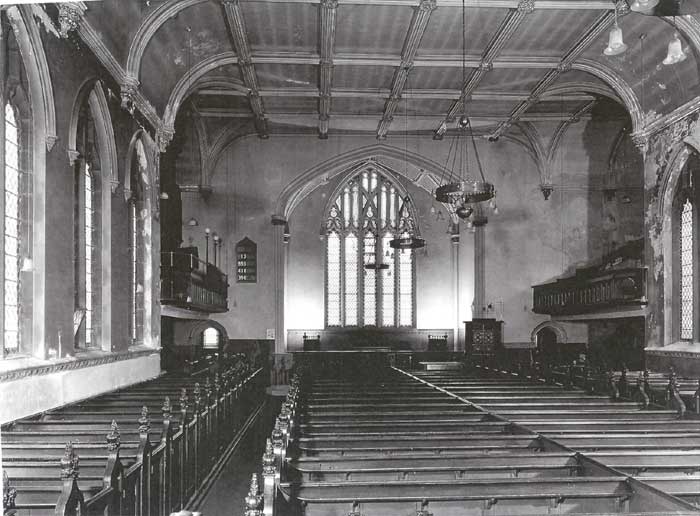
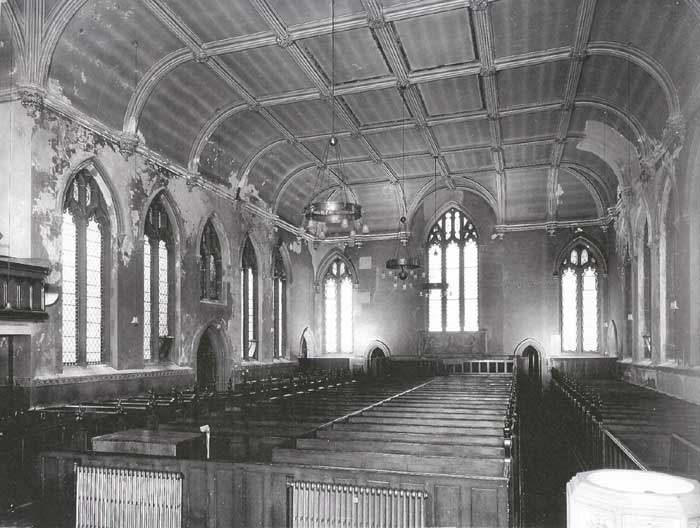
An early photograph of the chapel interior shows the organ loft and the carved gallery rail, with the pulpit and font on the lower floor. The fitted pews seated a substantial congregation through the chapel's busiest decades, when the cotton mills were at their height.
Closure.
The decline of the cotton industry through the twentieth century gradually emptied the village. Brooksbottoms Mill closed; the railway lost its passenger service in 1972; families who had worked at the mills moved away.
The chapel, by then in poor condition and beyond the funds of the diminished congregation to restore, closed in 1973.
The final photographs.
A series of photographs were taken shortly before demolition, both of the empty chapel and of its interior. Pews were removed, fittings stripped, and the building came down soon afterwards. The graveyard and the Kay mausoleum were left in place.